How Feeder Placement Shapes Chicken Feeding Behavior (and Why It Matters for Flock Performance)
In modern poultry management, feed quality is only half the equation. The placement of the feeder inside the coop or run plays a surprisingly powerful role in how chickens eat, compete, and grow. Small adjustments in positioning can improve feed efficiency, reduce waste, and support calmer flock dynamics.
This guide breaks down the science and practical setup strategies behind feeder placement—and how automated systems can help standardize better results.
???? Why Feeder Position Changes Chicken Behavior
Chickens are highly responsive to spatial hierarchy and visibility of resources. When feeders are poorly placed, it can lead to:
-
Uneven access between dominant and weaker birds
-
Increased pecking order aggression
-
Feed spillage and contamination
-
Reduced overall intake efficiency
Optimal placement reduces stress and encourages consistent feeding patterns, especially in mixed-age flocks.
???? Best Feeder Placement Zones (Practical Layout Guide)
Different coop zones influence how chickens interact with feed. Below is a simplified comparison:
| Placement Zone | Behavior Impact | Feed Waste | Recommended Use |
|---|---|---|---|
| Center Coop Area | High competition, dominant birds win access | Medium | Small flocks |
| Corner Placement | More structured queue behavior | Low | Medium flocks |
| Elevated Platform | Reduces contamination & bullying | Very low | All flock sizes |
| Outdoor Covered Run | Natural spacing, less stress | Low-medium | Free-range systems |
???? Key Insight: Elevated or semi-isolated feeder placement consistently improves feeding equality.
?? Ground vs Elevated Feeding: What Changes?
Feeding height is often overlooked, but it strongly influences flock dynamics:
-
Ground-level feeders
-
Easier access for chicks
-
Higher risk of contamination
-
More aggressive pecking interactions
-
-
Elevated feeders
-
Cleaner feed conditions
-
Reduced waste from scratching
-
More orderly feeding queues
-
For most backyard and small farm systems, slightly elevated feeders (5–15 cm off the ground) offer the best balance between access and hygiene.
???? Real-World Case Insight (Small Farm Setup)
A 40-chicken backyard farm in a temperate climate tested two setups over 3 weeks:
-
Week 1: Ground feeder in central coop area
-
Week 2–3: Elevated feeder placed near corner, partially sheltered
Observed results:
-
Feed waste reduced by ~18–25%
-
Noticeably less aggression during feeding times
-
More uniform flock weight distribution
-
Cleaner coop floor conditions
The key change was not feed type—but location and access structure.
???? Why Automatic Feeders Improve Placement Efficiency
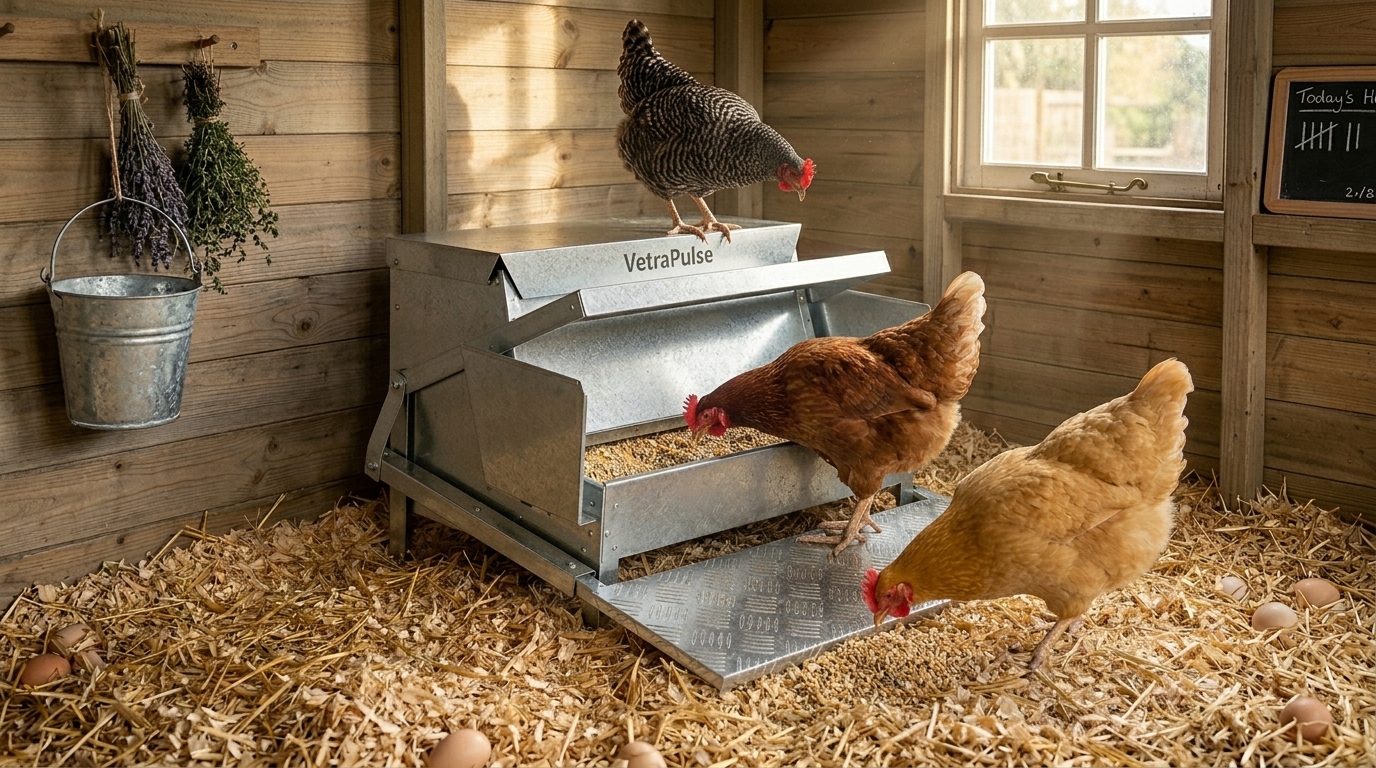
Modern automatic feeding systems allow precise control over both timing and spatial consistency. Instead of multiple scattered feeders, a single well-placed system can stabilize flock behavior.
Benefits include:
-
Controlled feed dispensing cycles
-
Reduced human error in feeding schedules
-
Cleaner and more contained feeding zones
-
Better monitoring of consumption patterns
For farmers scaling operations or managing time efficiently, automation becomes a major advantage.
???? Explore poultry feeding solutions:
Poultry Feeders Collection
???? Automatic feeding system option:
Automatic Chicken Feeder
? FAQ(Q&A)
1. Where should I place a chicken feeder in a small coop?
Place it in a corner or along a side wall with enough walking space to reduce crowding and dominance pressure.
2. Is elevated feeding better for chickens?
Yes. Elevated feeders generally reduce contamination and improve feed efficiency, especially in adult flocks.
3. How many feeders do I need for 20–40 chickens?
Typically 1–2 well-placed feeders are enough if they are designed for continuous or automated dispensing.
4. Can feeder placement reduce aggression?
Yes. Proper spacing and visibility reduce competition and help maintain a more stable pecking order.
???? Final Takeaway
Feeder placement is not a minor detail—it directly influences feeding efficiency, flock harmony, and overall productivity. When combined with structured coop design and automation, it becomes a scalable advantage for both backyard keepers and commercial poultry systems.
A well-positioned feeder does more than feed chickens—it organizes behavior.